Smart Chiller HVAC Monitoring System
Dehumidify and cool your commercial facilities with intelligent IoT-driven HVAC control.
In today's warming climate, chillers have become vital components for hospitals, manufacturing plants, and sporting arenas. Trackster’s monitoring system ensures your heat transfer devices operate at peak efficiency, transferring heat from internal surroundings to external environments seamlessly.
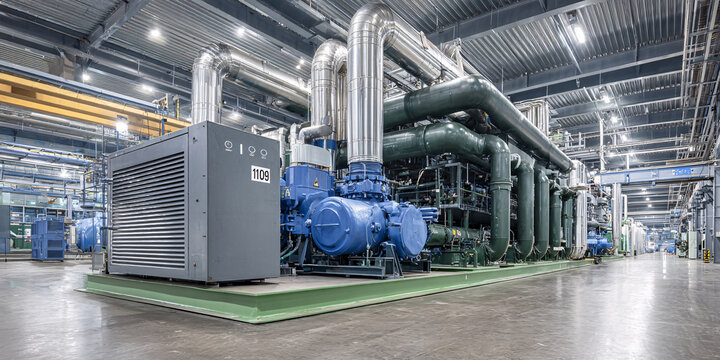
How Our Chiller Monitoring Works
Our system relies on the physical principles of vapor compression and thermodynamic monitoring.
Evaporator Tracking
We monitor the heat exchange process where the refrigerant captures heat from the coolant, ensuring a smooth transition from liquid to vapor state.
Compressor Optimization
Ensuring the pressure remains high enough to release heat effectively while keeping energy consumption at a minimum.
Condenser Management
Monitoring the release of heat into the atmosphere via air or water mediums, bringing the refrigerant back to its liquid state.
Increasing Your System Efficiency
Predictive Maintenance
IoT-enabled data collection allows for real-time analysis, identifying potential failures before they create major downtime.
Energy Optimization
Our smart systems automatically decrease ventilation flow when buildings are unoccupied, saving significant energy costs.
Remote Diagnosis
Identify and handle system problems remotely, maximizing production uptime without requiring immediate on-site human intervention.
Chiller HVAC Monitoring FAQ
What is a Chiller HVAC Monitoring System?
It is an IoT-based solution designed to track and optimize the performance of chillers. It ensures efficient cooling, reduces energy consumption, and prevents equipment breakdown through real-time data.
How does a chiller work in an HVAC system?
A chiller transfers heat from the building's interior to the outside using vapor compression. It circulates refrigerant through an evaporator, compressor, condenser, and expansion device.
What are the two main types of chillers?
The two main types are Water-Cooled Chillers and Air-Cooled Chillers. Trackster's system is compatible with both architectures.
Can IoT help reduce HVAC energy bills?
Yes. IoT sensors provide real-time monitoring of power consumption. By optimizing water set points and load balancing, energy wastage is minimized.
What is Predictive vs Preventative maintenance?
Preventative maintenance is scheduled cleaning and inspection. Predictive maintenance uses IoT data to identify specific parts that are showing signs of failure before they actually break.
Does the system provide alerts for refrigerant leaks?
Yes. By monitoring pressure and temperature fluctuations in the evaporator and condenser, the system can alert you to potential refrigerant loss or leaks.
Can this system be used in hospitals?
Absolutely. It is critical for hospitals to maintain constant temperatures for medicine storage and patient comfort, making our monitoring indispensable.
How does the system handle "Remote Diagnosis"?
Our dashboard displays live metrics. If a parameter falls out of range, technicians can view the error codes online and often reset or adjust the system remotely.
What parameters are monitored in the evaporator?
We monitor refrigerant pressure, liquid-to-vapor transition temperature, and the coolant flow rate to ensure maximum heat absorption.
Is Trackster's system scalable for large industries?
Yes. Whether you have a single chiller for a small office or a massive plant for a manufacturing facility, our IoT gateways can scale to monitor dozens of units simultaneously.