Industrial IOT Industry 4.0
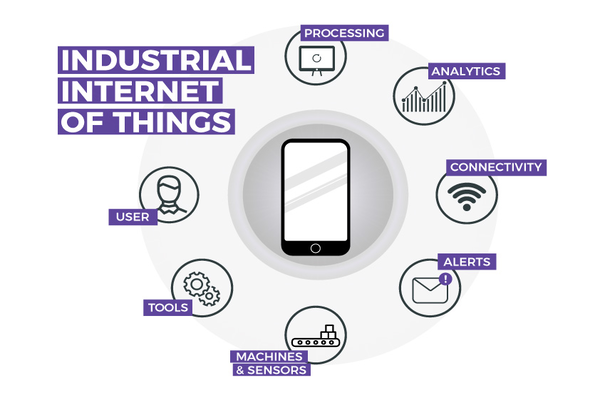
The Industrial Internet of Things (iIoT) is growing rapidly to manufacture goods to compete with our demands. Industrial Internet of Things or Industry 4.0 is one way to integrate smart manufacturing machinery to make every factory and worker working in the factory more powerful and efficient. Many industrialists have started to implement IIOT devices in their industries for making them more efficient. This IoT-based industry is bringing a vast change in the way factories function thus making them safer and efficient, more flexible, and eco-friendly.
What are the major iIoT challenges?
- Interoperability: The devices and machines follow a different set of rules and are made up of different designs. This can be easily recovered by allowing both machines and devices to communicate with each other via API calls.
- Security: Using iIOT, means transitioning to the cloud, and using the cloud can lead to data theft, cyber-attacks and can cause much more damage to the system. So, companies and their stakeholders need to work together to recover from all these risks of intelligent machinery connected over the network.
Benefits of Using iIOT
- Increases Efficiency: With the direct use of manufacturing products automatically and boosting the efficiency of the products produced, Robotics and automated machinery are working together to optimize their operating efficiency, thus boosting productivity and working of internal functions.
- Predictive Maintenance: Manufacturers can schedule maintenance of the internal operating tools required in the industries to ensure machines in the industries are producing products at an optimal rate and of good quality.
- Reduce Errors: Errors can be removed by removing manual entries and processes. Apart from this, the IIOT solution helps to remove the cyber risk caused by human error.
- Reduce Costs: Manufacturers working in the industries are well trained in reducing the overall costs and generating more revenue.
- Enhance Safety: Sensors used in the IIOT manufacturing operation are the main tool to improve employee safety.
- Smart Metering: Smart meters are installed in the industries to monitor the actual consumption of water, electricity, and fuel to ensure the exact consumption of these resources. Smart meters also help in reducing energy theft and operating expenses, improving forecasting and power consumption, etc.
The rise of industrialist not only lead to the increase in the production level, but it will also increase the employment rate by hiring more and more manufacturers and workers to manage the internal operation of the industries. In this way, industries will become the powerful force behind increased innovation and will also lead to the direct collaboration of suppliers and producers to become more efficient.