What is a Vehicle Tracking System?
Date: 23-04-2024
Table of Contents :
Vehicle tracking systems have become an indispensable tool for businesses and individuals seeking to monitor and manage vehicles remotely. This technology provides real-time location tracking and monitoring for complete visibility and control over fleets. Here, we will explore what exactly vehicle tracking systems are, their key components, top benefits, and leading applications across industries.
An Introduction to Vehicle Tracking Systems
A vehicle tracking system is an electronic device installed in vehicles to enable real-time tracking of the vehicle’s location and other data. It consists of an onboard diagnostics device connected to a GPS receiver that communicates with satellites and cellular networks to transmit information to a central monitoring platform.
A vehicle monitoring system provides continuous tracking of the vehicle’s geographic coordinates while also collecting other telemetry data from the vehicle’s systems - like speed, fuel levels, engine diagnostics, driver behavior metrics and more. This data offers invaluable insights into vehicle health, driver conduct, operational efficiency and location monitoring.
The vehicle gps tracker sends location and sensor data at regular intervals to a cloud-based or on-premise tracking software platform. The platform displays real-time location updates on digital maps for dispatchers to monitor. The location and diagnostic data is also stored historically for management reporting and analytics. Users can access information through web and mobile apps.
Key Components of a Vehicle Tracking System
Modern vehicle tracking systems are complex telematics solutions with many integrated components working together:
- • GPS Tracking Device – This is the heart of the system installed in each vehicle. It has an embedded cellular modem, GPS chipset, memory and microprocessor. The ruggedized waterproof housing mounts covertly in the vehicle.
- • Cellular Data Network – Cellular connectivity like 3G/4G enables continuous transfer of GPS coordinates and telemetry data from the devices to the tracking servers.
- • GPS Satellites – The devices leverage GPS satellites to pinpoint geographic location coordinates as they move.
- • Software Platform – The servers and software platforms receive, process and store the incoming data from tracking units. Web and mobile apps allow access to real-time and historical tracking data.
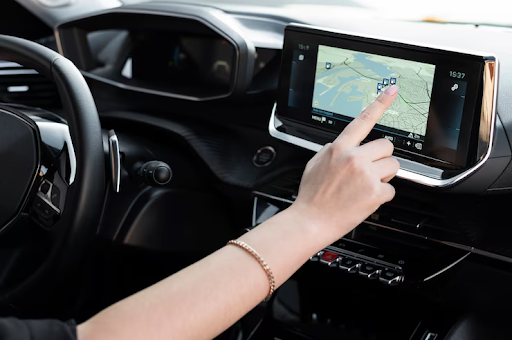
- • Mapping Integration – Visual representations of vehicle locations are overlaid on digital maps and satellite imagery for intuitive tracking. Geofencing and landmark layers are common.
- • Control Center – A central command center has a wall-mounted display with positioning intelligence and alerts for dispatchers to coordinate logistics.
- • Driver Interface – Smartphones or in-cab consoles give drivers turn-by-turn navigation, dispatch orders, messaging, worklogs and accident reporting abilities.
- • Alerts & Notifications – Automated alerts can be set up, like for speeding, unplanned stops, maintenance issues, unauthorized usage and more.
When integrated together, these components enable comprehensive monitoring, management and optimization of fleets. The systems provide control rooms with complete visibility over service delivery and field assets. Next, let’s look closer at the major benefits vehicle tracking provides.
Key Benefits of Vehicle Tracking Systems
Adopting a vehicle tracking system offers numerous advantages for businesses managing fleets:
1. Real-Time Visibility & Monitoring
Always know where your vehicles are and where they’ve been with live location tracking. Monitoring key metrics like stop time, idle time and mileage gives visibility into field ops.
2. Fleet Optimization & Dispatch
Optimize routes and loads based on real-time data to improve productivity and cut fuel/labor costs. Dynamic dispatch improves response times and resource allocation.
3. Driver Safety & Accountability
Protect your drivers and enforce safe driving by monitoring speed, acceleration, braking and collision incidents. Ensure drivers follow procedures and arrival/departure times.
4. Regulatory Compliance
Electronic driver logs, vehicle maintenance logs and reporting help transport companies comply with government safety regulations and allowable operating hours.
5. Asset Security
Protect your vehicle assets from misuse or theft with geo-fences and unauthorized movement alerts. Remotely disable ignition or fuel supply to aid recovery of stolen vehicles.
6. Fuel Consumption Reduction
Analyze driving habits and idling to identify wasted fuel usage. Optimizing routes also lowers mileage. This improves fuel efficiency across the fleet.
7. Maintenance & uptime
Get engine diagnostics like battery voltage, coolant temperature, emissions and engine codes. Predictive maintenance reduces downtime and repairs.
8. Enhanced Customer Service
Share vehicle locations and ETAs with customers/recipients. They can track deliveries in real-time for superior service and convenience.
9. Driver Performance
Incentivize safe, efficient driving by monitoring speed, acceleration and braking patterns. Scorecards help train drivers and reduce risk.
10. Incident Management
Exonerate drivers and settle legal disputes with evidence from incident recordings and vehicle telemetry leading up to impacts.
These benefits translate into significant cost savings, risk reduction, improved safety, optimized fleet efficiency, and increased customer satisfaction. Next, let’s look at major applications.
Top Applications of Vehicle Tracking
Vehicle tracking and telematics systems deliver value across many industries. Here are some of the top applications:
1. Transportation & Logistics
Fleet tracking with dispatch integration optimizes routing and asset utilization for haulers, refrigerated transport and distribution companies. Deliveries are executed faster at lower costs. Real-time freight tracking enhances supply chain visibility.
2. Public Transit
Track and manage buses, trains, paratransit vehicles to improve commuter convenience and safety. Analyze routes and driver patterns to boost reliability and timing.
3. Construction & Mining
Monitor vehicle movements, productivity and site safety compliance for construction vehicles like excavators, dump trucks, cranes, and more.
4. Emergency Responders
Optimize dispatch of police vehicles, ambulances and fire trucks responding to emergency calls. GPS tracking aids coordination and improves response times.
5. Food/Beverage Delivery
Last mile delivery fleets for pizza, pharmacy, grocery chains etc. use live ETAs and real-time order status to delight customers. Route optimization saves on fuel costs and driver hours.
6. Field Service Fleets
Plumbing, pest control, telco van fleets use GPS tracking to manage jobs, technician schedules and customer appointment arrival times.
7. Insurance Telematics
Analyze individual driver behaviors using OBD data to create targeted risk profiles and usage-based insurance rates.
8. Government & Military
Tactical tracking of government vehicles, aircrafts, and marine vessels using advanced military-spec GPS trackers. Improves national security and asset protection.
9. Utility Fleets
Track trucks servicing power grids, gas infrastructure, water lines, waste management. Monitor vehicle efficiency and technician productivity.
10. Shared Mobility
Positioning and usage tracking for car share, bike share, ride share and micro mobility vehicles. Enables rebalancing, maintenance, rider safety and asset protection.
This just scratches the surface of the countless ways vehicle tracking systems are transforming transportation, logistics and commercial fleet operations. The technology delivers diverse benefits across many verticals.
Choosing the Right GPS Tracking System
With countless vehicle tracking systems on the market, it’s important to choose an advanced future-proof solution tailored to your specific business needs and use cases. Here are some key features to evaluate:
Real-time location tracking - The platform should provide regular live location updates, ideally every 30 seconds or less. This allows proactive monitoring rather than just historical tracking.
Sensor & OBD integration - Look for tracking devices that connect directly to engine systems and external sensors like driver ID, temperature, door open/close etc. This provides data on vehicle condition, maintenance needs and driving behaviors.
Smartphone integration - Leveraging drivers’ own smartphones via an app provides capabilities like turn-by-turn navigation, messaging, and job management without hardware costs.
Video & driver monitoring - Integrated cameras deliver visual verification and driver safety improvements. Look for advanced video analytics capabilities.
Intuitive software - The user interface should be well-designed and easy to use on both desktop and mobile. It should display locations on digital maps and provide access controls.
Custom alerts & reports - Flexible rules engine for setting up automatic alerts and reminders for speeding, GEOfence entry/exit, unnecessary idling and more. Custom reports are essential.
Messaging & dispatching - Two-way messaging enables communication between dispatch and drivers. Integrated workflow and coordination optimizes field service scheduling.
Compliance features - Electronic logs, DVIR, hours of service management helps commercial fleets stay compliant and audit-ready.
Predictive analytics - Look for platforms leveraging artificial intelligence, machine learning and statistical algorithms to uncover hidden insights from telematics data to improve fleet ops.
By evaluating solutions against critical criteria and business objectives, an optimal GPS tracking provider can be selected. The improvements to fleet performance deliver a quick ROI that justifies the technology investment.
The Future of Vehicle Tracking
Vehicle telematics systems continue getting smarter and more interconnected. AI and machine learning will help managers make data-driven decisions quickly. Real-time integration with smart city infrastructure will optimize routing and automate reporting. Augmented reality overlays in driver cockpits will assist navigation and hazard identification. Connected vehicles will coordinate and self-optimize vehicle convoys. Ultimately the technology will facilitate the transition to autonomous urban mobility.
Conclusion
Vehicle tracking systems have evolved from basic GPS coordinates broadcast over radio waves to sophisticated Internet-of-Things telematics platforms leveraging big data and analytics. The insights produced by modern solutions enable complete command and control over fleets for streamlined operations, lower costs and reduced risks. The technology is rapidly becoming an operational necessity for any business managing valuable assets, mobile assets across roads and worksites.
Experience the benefits of next-gen vehicle tracking for your own fleet. Trackster offers an advanced telematics solution packed with features to optimize fleet efficiency and safety.


 9819109211